Mystery and thriller genres have always had a special appeal to readers and viewers. From the intricate web of clues to the unnerving suspense, these genres have something for everyone. But have you ever thought – what makes them so captivating? Lars Emmerich, a renowned thriller writer, has deeply explored this question, and in this article, we will venture into the alluring world of the mystery and thriller genres alongside Lars Emmerich.
Exploring the allure of mystery and thriller genres
One of the most significant draws of the mystery and thriller genres is their ability to keep the audience on the edge of their seats – desperately trying to figure out what will happen next. Lars Emmerich explains this as a form of escapism, “People are drawn to these genres as they allow them to lose themselves in the story completely.”
Another reason why mystery and thriller genres are so popular is that they often deal with complex and thought-provoking themes. These genres can explore issues such as morality, justice, and the human psyche in a way that is both entertaining and intellectually stimulating.
Furthermore, mystery and thriller novels often feature strong and compelling protagonists who are determined to solve the case or overcome the obstacle at hand. These characters can serve as role models for readers, inspiring them to be brave, resourceful, and persistent in their own lives.
The evolution of mystery and thriller tropes through time
The mystery and thriller genres have undergone several changes throughout their history. Lars Emmerich explains that each period has its unique style, from the early days of detective stories to the present-day thrillers. He notes that the most significant change in the genre is the shift from detective stories to thrillers. Nowadays, readers and viewers want more than just a resolution to the puzzle – they want twists and turns, heart-pumping action, and an emotional connection to the story and characters.
One of the other notable changes in the mystery and thriller genres is the portrayal of the protagonist. In the early days, detectives were often portrayed as flawless, almost superhuman figures who always solved the case. However, in modern thrillers, the protagonist is often flawed, with personal demons and struggles that they must overcome to solve the mystery. This change has made the characters more relatable and human, adding an extra layer of depth to the story.
The psychology behind our fascination with horror and suspense
Lars Emmerich believes that the fascination with horror and suspense stems from our natural human instinct to feel fear and uncertainty. In his words, “Fear is a fundamental emotion in human beings, and when they read about or watch something that is indescribably gruesome or unthinkable, they are scared to death, but they also love the adrenaline rush that comes with it.”
Moreover, some psychologists argue that horror and suspense can serve as a form of catharsis for individuals. By experiencing fear and anxiety in a controlled environment, such as through a horror movie or book, individuals can release pent-up emotions and feel a sense of relief afterwards.
However, it is important to note that not everyone is drawn to horror and suspense. Some individuals may have a lower tolerance for fear or may simply not enjoy the genre. Additionally, exposure to excessive violence or gore can have negative effects on mental health, particularly for individuals who have experienced trauma in the past.
The role of setting in creating a chilling atmosphere
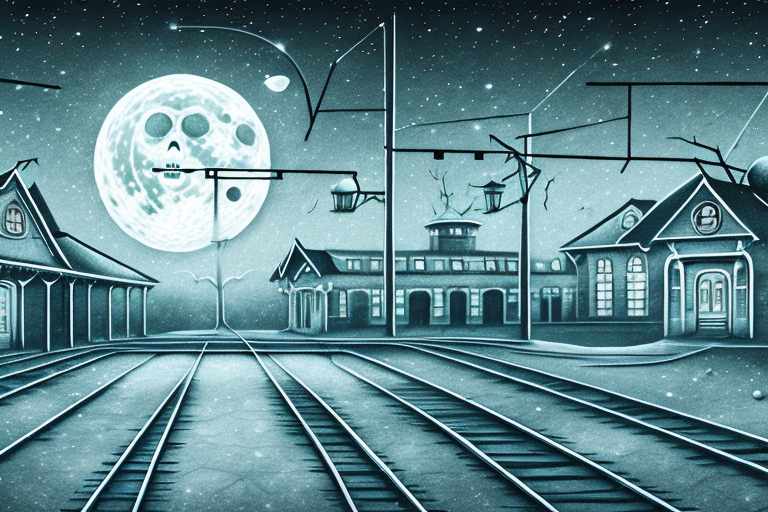
In thriller writing, the setting plays a crucial role in building suspense and atmosphere. Writers like Lars Emmerich utilize eerie or frightening settings to increase the tension and create a visceral sense of anxiety in the reader. For instance, the haunted train station can be an ideal setting for horror stories, with its long, dark corridors and whispering echoes.
Another way that setting can contribute to a chilling atmosphere is by creating a sense of isolation or confinement. A remote cabin in the woods, for example, can make the characters feel cut off from civilization and vulnerable to whatever dangers lurk outside. Similarly, a locked room or underground bunker can heighten the tension by trapping the characters in a confined space with no escape.
However, it’s important for writers to remember that the setting should not overshadow the characters or the plot. While a creepy setting can be effective in creating a chilling atmosphere, it’s ultimately the characters’ actions and motivations that drive the story forward. The setting should enhance the story, not distract from it.
How Lars Emmerich incorporates classic horror elements into his writing
Lars Emmerich is known for his skillful incorporation of classic horror elements into his writing. His thriller books often have supernatural elements, such as ghosts or demonic presences, that add an extra layer of terror and horror to the story. This combination of classic horror elements and the fast-paced thrillers has made Lars Emmerich a best-selling author in his genre.
One of the ways Lars Emmerich incorporates classic horror elements into his writing is by using familiar tropes and themes, but putting his own unique spin on them. For example, in his novel “The Haunting of Ashburn House,” Emmerich takes the classic haunted house story and adds a modern twist by making the protagonist a young, independent woman who is determined to uncover the truth behind the haunting. This fresh take on a classic horror trope keeps readers engaged and on the edge of their seats.
The significance of haunted train stations in mystery and thriller literature
The haunted train station is a popular trope in mystery and thriller literature. Lars Emmerich explains that the train station acts as a metaphor for human transience – a place where people come, go, and leave their secrets. It’s also a perfect setting for a mystery or thriller story as it’s a place filled with strangers, all with their own stories and motives.
Furthermore, the haunted train station often represents a liminal space, a threshold between two worlds. This can be seen in Agatha Christie’s “Murder on the Orient Express,” where the train station serves as a gateway to a world of luxury and intrigue. The station becomes a microcosm of society, where the characters are forced to confront their own prejudices and biases.
Another reason why the haunted train station is a popular setting in mystery and thriller literature is that it creates a sense of claustrophobia and isolation. The characters are trapped in a confined space, with no escape from the danger that lurks within. This is exemplified in Stephen King’s “The Dark Tower III: The Waste Lands,” where the characters are stranded in a haunted train station, surrounded by malevolent spirits and creatures.
Analyzing the use of supernatural elements in Lars Emmerich’s work
As mentioned earlier, Lars Emmerich has a unique way of combining horror with suspense, and he does this through the use of supernatural elements in his work. He mentions that supernatural elements provide a great device to create an atmosphere of uncertainty and fear. He cleverly uses them to blur the line between reality and fiction, making the reader question what’s truly happening in the story.
The importance of character development in mystery and thriller storytelling
Lars Emmerich believes that character development plays a vital role in thriller storytelling. Readers need to feel an emotional connection with the protagonists to invest themselves in the story. The character’s journey throughout the story is what makes the story interesting and memorable, as they overcome seemingly impossible obstacles and grow as individuals.
The impact of technology on the mystery and thriller genre
In today’s world, technology has drastically changed the way we perceive mystery and thriller stories. Lars Emmerich notes that technology has made it easier for writers to deliver complex plots and stories to the readers, but it has also taken away some of the human elements of the story. In his opinion, technology must be used to create a sense of realism and authenticity to make the story more engaging and relatable.
In conclusion, mystery and thriller genres have a special place in the hearts of readers and viewers worldwide. Lars Emmerich’s in-depth knowledge and interest in the genre make him an expert on the topic. We hope this article was informative and enlightening, taking you on a journey through the alluring world of mystery and thriller genres.