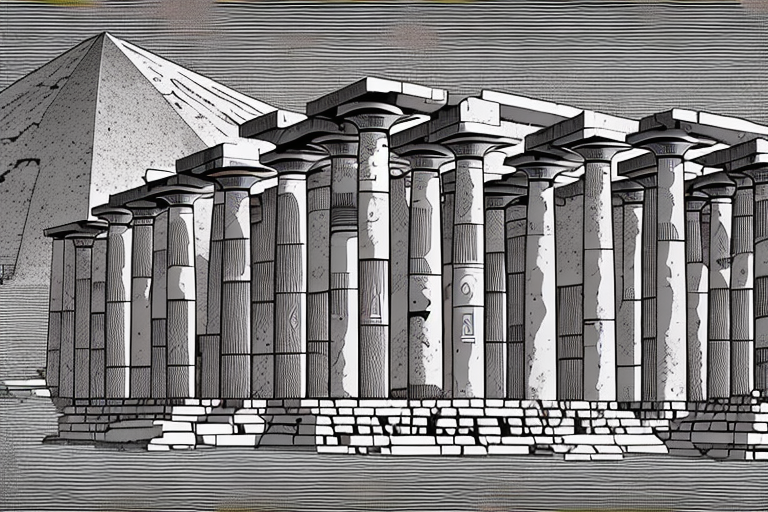
Ancient Egypt has fascinated people for centuries, with its stunning pyramids, mysterious hieroglyphs, and unique cultures. It is not surprising that this culture has provided such a rich source of inspiration for mystery and thriller writers. One of the most enduring and popular motifs in these genres is the ancient Egyptian curse. This sinister theme has been used in countless works, from classic whodunits to modern thrillers.
Exploring the Fascination with Ancient Egyptian Curses in Fiction
The fascination with ancient Egyptian curses in fiction dates back to the late 19th and early 20th centuries, when archaeologists made a series of high-profile discoveries in Egypt, including the tomb of Tutankhamun. These discoveries sparked people’s imaginations and fueled the growth of Egyptology as a field of study.
As more information about ancient Egyptian beliefs and practices became available, it was natural for writers to incorporate this knowledge into their stories. The concept of a curse that would befall anyone who disturbed an Egyptian tomb was particularly appealing. It tapped into people’s fear of the unknown and their fascination with the exotic.
However, the idea of ancient Egyptian curses in fiction has been criticized for perpetuating harmful stereotypes about Egypt and its people. The portrayal of Egyptians as mystical and dangerous has been called out as a form of Orientalism, which is the Western tendency to exoticize and romanticize non-Western cultures. Some argue that this portrayal reinforces negative stereotypes and contributes to a lack of understanding and respect for Egyptian culture.
The Origins of the Ancient Egyptian Curse in History and Mythology
While the ancient Egyptian curse might seem like a modern invention, it actually has roots in both history and mythology.
In ancient Egyptian society, curses were a common way of dealing with those who had committed crimes or violated sacred spaces. They were considered a powerful tool for invoking the gods’ wrath and punishing wrongdoers.
In mythology, one of the most famous examples of a curse in ancient Egypt is the story of Osiris. According to legend, Osiris was murdered by his jealous brother Seth, who dismembered the body and scattered it throughout Egypt. Osiris’s wife, Isis, managed to gather the pieces and reunite them, but she could not bring him back to life. Instead, she created a funerary cult focused on Osiris’s resurrection and used curses to protect his remains from being disturbed.
Another example of the use of curses in ancient Egyptian mythology is the story of Ra and the serpent Apep. Apep was a powerful serpent who threatened to swallow the sun each day, plunging the world into darkness. Ra, the sun god, would battle Apep each day, and the outcome of the battle would determine whether the sun would rise or not. To aid in his battle, Ra would use curses to weaken Apep and ensure his victory.
Outside of mythology, curses were also used in everyday life in ancient Egypt. For example, curses were often inscribed on tombs to protect the deceased from harm and to prevent grave robbers from stealing their treasures. Curses were also used in legal disputes, with individuals invoking the gods to curse their opponents and ensure a favorable outcome in court.
How the Ancient Egyptian Curse Became a Popular Motif in Mystery and Thriller Novels
The popularity of the ancient Egyptian curse in mystery and thriller novels can be traced back to writers like Arthur Conan Doyle, Agatha Christie, and Edgar Allan Poe. These authors used the concept of the curse to create tension and drama in their stories, often with elaborate and macabre effects.
One of the most famous examples of a story featuring an ancient Egyptian curse is Doyle’s “The Adventure of the Egyptian Tomb,” in which Sherlock Holmes investigates a series of deaths that have occurred after the opening of an Egyptian tomb. In Christie’s “Death Comes as the End,” the curse of an Egyptian priest is blamed for the deaths that occur in a wealthy family.
However, the use of the ancient Egyptian curse in mystery and thriller novels is not limited to these classic authors. In recent years, many contemporary writers have also incorporated this motif into their works. For example, in Elizabeth Peters’ “Crocodile on the Sandbank,” the curse of an ancient Egyptian queen is central to the plot, as the protagonist investigates a series of mysterious events that occur at an archaeological dig site.
Despite the fact that the ancient Egyptian curse is often used as a plot device in mystery and thriller novels, it is important to note that the concept of the curse has no basis in reality. While ancient Egyptians did believe in the power of curses, there is no evidence to suggest that curses were ever actually placed on tombs or individuals. Nevertheless, the idea of a powerful and malevolent curse continues to captivate readers and writers alike, making it a timeless and enduring motif in the genre of mystery and thriller fiction.
The Role of Archaeology and Egyptology in Creating the Ancient Egyptian Curse Narrative
The development of the ancient Egyptian curse as a narrative trope was closely tied to the growth of archaeology and Egyptology. As more information about ancient Egypt became available, writers had access to a rich source of material that they could use in their stories.
Furthermore, the excavation of Egyptian tombs and artifacts provided a level of authenticity to the idea of an ancient curse. The public was captivated by the idea that these long-dead civilizations could still hold some power over the present through their curses.
The Psychology of Fear: Why the Ancient Egyptian Curse is So Scary to Readers
Part of the appeal of the ancient Egyptian curse is its ability to tap into people’s fear of the unknown and the supernatural. The idea that a curse from a long-dead civilization could still have an effect on the present is both eerie and exciting.
Furthermore, the concept of the curse plays into people’s psychological biases. Humans have a tendency to see patterns where there are none, and the concept of the curse is a prime example of this. When something bad happens after a tomb is opened, it is easy to assume that the curse is to blame, even if there is no evidence to support that claim.
The Different Types of Ancient Egyptian Curses and How They Are Used in Fiction
There are many different types of ancient Egyptian curses, each with its own unique properties and effects. Some of the most common types of curses used in fiction include:
- Physical curses, which cause harm or death to those who disturb a tomb or artifact
- Mental curses, which cause madness or other psychological effects
- Disease curses, which cause sickness or other ailments
- Fate curses, which bring about bad luck or misfortune
Writers often combine these different types of curses to create a more complex and frightening curse in their stories.
From King Tut to Cleopatra: Famous Examples of the Ancient Egyptian Curse in Literature and Film
The ancient Egyptian curse has been used in many different stories over the years, ranging from classic mystery novels to modern Hollywood blockbusters.
One of the most famous examples is the curse of Tutankhamun, which was supposedly responsible for the deaths of several people involved in the tomb’s discovery. This curse has been used as a plot device in many different works of fiction, including Doyle’s “The Adventure of the Egyptian Tomb” and the film “The Mummy.”
Other famous examples of the ancient Egyptian curse include the curse of Cleopatra and the curse of the pharaohs.
The Evolution of the Ancient Egyptian Curse Trope: From Classic Mysteries to Modern Thrillers
The ancient Egyptian curse trope has evolved significantly over time. In classic mystery novels, the curse was often used as a red herring or as a way to create tension and drama. In modern thrillers, the curse has become more of a central element of the story, with elaborate curses and supernatural elements.
Furthermore, the curse has also become increasingly global in its scope. Many modern stories use the idea of the ancient Egyptian curse as a way to explore themes of colonialism, globalization, and cultural appropriation.
Criticisms and Controversies Surrounding the Use of the Ancient Egyptian Curse in Fiction
The use of the ancient Egyptian curse in fiction has not been without controversy. Some critics argue that the trope perpetuates harmful stereotypes of ancient Egyptian culture and reinforces racist and colonialist attitudes.
Furthermore, there is also concern that the use of the ancient Egyptian curse reduces a complex and rich culture to a simple plot device. Critics argue that this diminishes the achievements and history of ancient Egypt and perpetuates a shallow and inaccurate understanding of the culture.
Conclusion
The ancient Egyptian curse is a fascinating and enduring trope in mystery and thriller fiction. Its roots in history and mythology, combined with its ability to tap into people’s fear of the unknown, have made it a powerful tool for writers. While the use of the curse in fiction is not without controversy, it remains a popular and effective narrative device that continues to captivate readers around the world.