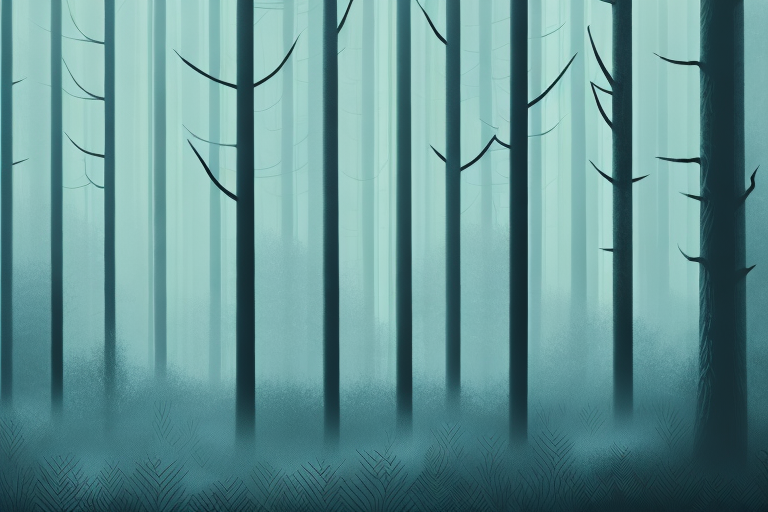
Mystery and thriller novels have always captivated readers with their ability to thrill and scare us simultaneously. It is a genre filled with unsolvable puzzles, heart-stopping suspense, and seemingly unsolvable mysteries. One of the favorite tropes of mystery and thriller writer Lars Emmerich is the cursed haunted forest. In this article, we will explore the origins of this trope and what makes it so captivating to readers.
Exploring the Origins of the Haunted Forest Trope in Literature
The idea of the cursed forest can be traced back to ancient folklore and has been used repeatedly in literature throughout history. The Brothers Grimm’s fairy tales like “Hansel and Gretel” and “Snow White,” both feature dark forests filled with danger and mystery. In literature, haunted forests have been used frequently to create an eerie and unsettling ambiance. One of the earliest examples of this trope can be found in Nathaniel Hawthorne’s short story “Young Goodman Brown,” which takes place in the shadowy depths of the New England forest, where the protagonist encounters the devil himself.
Another notable example of the haunted forest trope can be found in J.R.R. Tolkien’s “The Lord of the Rings” trilogy. The dark and ominous Mirkwood Forest serves as a major obstacle for the protagonists, and is home to giant spiders and other dangerous creatures. The forest is also said to be cursed by the dark magic of the Necromancer, adding to its eerie and foreboding atmosphere.
In more recent literature, the haunted forest trope has been used in popular young adult novels like “The Hunger Games” and “Percy Jackson and the Olympians.” In “The Hunger Games,” the arena is surrounded by a dense forest filled with deadly traps and mutated creatures. In “Percy Jackson and the Olympians,” the protagonists must navigate through the dark and dangerous forest of Camp Half-Blood, which is home to monsters and other supernatural beings.
The Role of Setting in Creating Suspense: An Analysis of Lars Emmerich’s Works
Lars Emmerich, a USA Today bestselling author who has been praised for his gripping storytelling, has used the cursed forest trope to great effect in his novels. Emmerich recognizes the importance of setting in creating a sense of dread and unease. In his books, the setting becomes almost a character in its own right. His works are often set in dark, foreboding forests that serve as the perfect backdrop for the spine-tingling mysteries his characters encounter.
Furthermore, Emmerich’s attention to detail in describing the setting adds to the overall suspense of his stories. He uses vivid imagery to paint a picture of the eerie forest, describing the twisted trees, the crunch of leaves underfoot, and the howling of wolves in the distance. This attention to detail not only creates a sense of place but also immerses the reader in the story, making them feel as though they are right there with the characters, experiencing the same fear and uncertainty.
Common Themes in Mystery and Thriller Novels Featuring Haunted Forests
In many mystery and thriller novels featuring cursed forests, there are a few common themes that make the stories so compelling. Secrets and lies are often at the heart of the mystery, and the forest becomes a symbol of the unknown depths of the human psyche. The cursed forest serves as a metaphor for the mysteries that surround us, and the horror that comes from exploring the unexplored.
Another common theme in mystery and thriller novels featuring haunted forests is the idea of isolation. The forest is often portrayed as a remote and desolate place, where the characters are cut off from civilization and left to fend for themselves. This isolation can create a sense of vulnerability and helplessness, which adds to the tension and suspense of the story. Additionally, the forest is often depicted as a place where the laws of society do not apply, and the characters must navigate a world where anything can happen.
The Psychology Behind Fear: How Haunted Forests Tap into Our Deepest Fears
Psychologists have studied why certain environments like the haunted forest can be so terrifying. Research has shown that we are evolutionarily conditioned to fear the unknown and dark spaces. Our brains interpret unfamiliar environments as potential threats, and this primal response is what makes the haunted forest so effective in creating feelings of dread and fear. It taps into our deepest fears of the unknown, and our inability to control our environment.
Furthermore, the use of jump scares and unexpected noises in haunted forests can also trigger our fight or flight response. This response is a survival mechanism that prepares our bodies to either confront a threat or run away from it. When we experience a jump scare in a haunted forest, our bodies release adrenaline and other stress hormones, which can cause physical symptoms like increased heart rate and sweating. These physical reactions can intensify our feelings of fear and make the experience even more terrifying.
From Folklore to Fiction: The Evolution of the Cursed Forest Storyline
Over time, the cursed forest trope has evolved from its roots in folklore to modern-day fiction. Today, writers continue to use the forest to create suspense and terror, but the stories have become more complex and the themes more nuanced. Whether it is in books, television, or film, the cursed forest remains a popular trope in the mystery and thriller genre, and it shows no signs of losing its allure among audiences.
The Importance of Character Development in Crafting a Compelling Thriller Novel
While the setting is important, it is not the only factor that makes a cursed forest story so gripping. The characters must also be fully developed, with clear motivations and personalities. Lars Emmerich excels at creating empathetic characters who are relatable and who we care for as we follow them through a haunted forest, their fears our own.
The Art of Foreshadowing: How to Build Tension and Keep Readers on the Edge of Their Seats
A key element of a successful cursed forest story is the art of foreshadowing. By hinting at what is to come, writers can build tension and suspense, keeping readers on the edge of their seats. Whether it is through subtle hints or overt warnings, skilled writers can use foreshadowing to ratchet up the tension, making readers desperate to know what happens next.
Examining the Use of Supernatural Elements in Haunted Forest Stories
Many cursed forest stories feature supernatural elements – ghosts, curses, or other preternatural occurrences. Whether it’s a vengeful witch or a malevolent spirit, the supernatural elements heighten the terror of the cursed forest. These elements create an extra layer of unpredictability, keeping readers guessing as to what the characters will encounter next.
The Power of Atmosphere: How Setting Can Shape a Story’s Mood and Tone
The setting of a cursed forest story plays a crucial role in creating its mood and tone. The atmosphere can be used to generate a sense of foreboding, dread, and fear. The curses, curses, and strange happenings that occur within the forest all serve to reinforce the story’s tone and atmosphere.
Tips for Writing Your Own Haunted Forest Tale
If you want to write a cursed forest story of your own, there are a few key elements to keep in mind. First and foremost, decide on a unique setting and an intriguing mystery that draws the reader in. Use the atmosphere to generate an atmosphere of fear and unease, and include fully formed characters that the reader can empathize with. Consider using foreshadowing and supernatural elements to build tension and keep readers on the edge of their seat.
A Look at Other Popular Mystery and Thriller Tropes, and How They Compare to the Haunted Forest Storyline
The cursed forest trope is just one of many popular tropes in the mystery and thriller genre. Other popular tropes include the locked room mystery, the serial killer thriller, and the amateur detective. Each of these has its own set of rules, requirements, and expectations. But, while these other tropes can be just as thrilling, the cursed forest will always occupy a special place in the genre due to its unique ability to create an atmosphere of terror and dread.
In conclusion, the cursed haunted forest is a trope that has stood the test of time. Its ability to tap into our deepest fears and create an atmosphere of terror has made it a favorite of mystery and thriller writers, including Lars Emmerich. For those looking to write their own haunted forest tale, remember the importance of setting, character, foreshadowing, and supernatural elements in creating a truly gripping story.