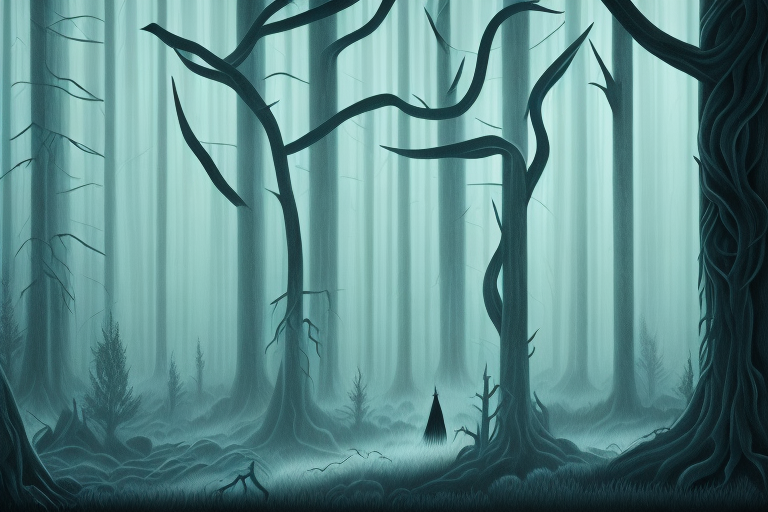
Supernatural beings have been a recurring theme in literature throughout history. Among them, banshees stand out as some of the deadliest and most intriguing creatures. Banshees have captured the attention of many authors, including renowned mystery and thriller writer Lars Emmerich. In this article, we will explore the origins of banshees, their evolution in popular culture, and their appeal as supernatural villains in literature. We will also discuss the role of banshees in Emmerich’s works and the psychological impact of portraying supernatural threats in fictional works.
Understanding the Origins of Banshees in Irish Mythology
Banshees are female spirits that are said to appear before a person’s death. The word “banshee” is derived from the Irish “bean sí,” which means “woman of the fairy mound.” In Irish mythology, banshees were often portrayed as dark-haired women dressed in green robes, who would cry out in mourning before a death occurred. They were considered to be omens of death and were only seen by members of certain Irish families.
According to legend, banshees were not always associated with death. In some stories, they were believed to be protectors of the family they were attached to, warning them of danger and watching over them. It wasn’t until Christianity arrived in Ireland that banshees became associated with death and mourning. Some believe that this was a way for the new religion to demonize the old pagan beliefs and practices. Despite this, banshees remain an important part of Irish folklore and continue to fascinate people around the world.
The Evolution of Banshees in Popular Culture
In popular culture, the portrayal of banshees has evolved over time. In some works of fiction, banshees are depicted as beautiful women with supernatural powers, while in others, they are terrifying undead creatures. In recent years, banshees have become popular supernatural villains in popular culture, appearing in movies, television shows, and video games. They often have the power to sense death and are feared for their ability to forewarn of imminent danger.
However, banshees have also been portrayed in a more sympathetic light in some works of fiction. In Irish mythology, banshees were believed to be spirits of deceased women who were mourning the loss of their loved ones. In some modern interpretations, banshees are depicted as protectors of their families and communities, using their supernatural powers to ward off evil and protect the innocent. This shift in portrayal reflects a growing interest in exploring the complexities of supernatural beings and their place in our world.
How Banshees Became a Staple in Mystery and Thriller Novels
The supernatural nature of banshees has made them a popular trope in mystery and thriller novels. The ability to sense death and forewarn of danger adds to the suspense and intrigue of the story. Additionally, the idea of a supernatural creature that is tied to a family’s fate has added a unique element to the genre.
Furthermore, banshees have also been used as a symbol of Irish folklore and culture in literature. Many authors have incorporated banshees into their stories as a way to pay homage to their Irish heritage or to add an element of authenticity to their setting. The banshee’s haunting wail and connection to death also adds a sense of mysticism and otherworldliness to the story, which can be appealing to readers who enjoy supernatural elements in their reading material.
Analyzing the Appeal of Supernatural Villains: Banshees vs. Vampires and Werewolves
When it comes to supernatural villains, banshees stand out due to their unique abilities and connections to death. Vampires and werewolves, while also popular, do not have the same level of forewarning and mystery that banshees possess. Additionally, the fact that banshees are often tied to specific families adds a personal element to the threat that the protagonist faces.
However, despite the appeal of banshees, vampires and werewolves have their own unique qualities that make them popular villains in supernatural fiction. Vampires, for example, are often portrayed as seductive and alluring, using their charm to lure in their victims. Werewolves, on the other hand, tap into our primal fears of losing control and becoming a monster. Both vampires and werewolves also have the added element of transformation, which can be visually striking and add to the suspense of the story.
The Role of Banshees in Lars Emmerich’s Novels: A Comparative Analysis
Lars Emmerich is a prolific mystery and thriller writer who has made banshees a central element of some of his works. In his novel “The Banshee’s Cry,” Emmerich explores the idea of a banshee who foretells the death of members of a wealthy family. He also uses banshees as a central plot point in “The Silent Ordeal” and “Deadly Betrayal.”
One interesting aspect of Emmerich’s use of banshees is how he incorporates different cultural beliefs and legends surrounding these supernatural beings. In “The Banshee’s Cry,” he draws from Irish folklore, where banshees are said to be female spirits who wail to warn of impending death. In “The Silent Ordeal,” he incorporates the Scottish belief that banshees are malevolent spirits who cause harm and chaos.
Furthermore, Emmerich’s portrayal of banshees also varies in terms of their appearance and abilities. In “Deadly Betrayal,” the banshee is described as a beautiful woman with long hair and piercing green eyes, who can manipulate the emotions of those around her. In contrast, the banshee in “The Banshee’s Cry” is depicted as a haggard old woman with a raspy voice, who only appears to those who are about to die.
Unpacking the Psychological Impact of Supernatural Threats in Fictional Works
Supernatural threats, such as banshees, can have a significant psychological impact on readers. The fear of the unknown and the inevitability of death can be especially daunting. However, the portrayal of supernatural threats in literature can also serve as a form of catharsis and help readers confront their own fears and mortality.
Moreover, the use of supernatural threats in fictional works can also provide a sense of escapism for readers. By immersing themselves in a world where supernatural beings exist, readers can temporarily forget about their own problems and concerns. This can be especially beneficial for individuals who are dealing with high levels of stress or anxiety in their daily lives.
The Fine Line Between Suspenseful Fiction and Cultural Appropriation: A Debate on Depicting Mythological Creatures
While banshees have become popular supernatural villains in popular culture, there is also a debate about cultural appropriation when it comes to using mythological creatures in literature. Some argue that the portrayal of banshees as undead monsters perpetuates negative stereotypes about Irish culture. Others argue that the use of banshees in literature is a form of cultural appreciation and can help to keep mythological traditions alive.
However, the debate on cultural appropriation in literature goes beyond just banshees. Many other mythological creatures from different cultures have been used in literature, and the question of whether it is appropriate or not remains. For instance, the use of Native American mythological creatures in literature has been a topic of controversy, with some arguing that it perpetuates harmful stereotypes and others arguing that it can help to educate readers about Native American culture.
Moreover, the debate on cultural appropriation in literature is not limited to just mythological creatures. It also extends to the portrayal of characters from different cultures and backgrounds. Some argue that authors should only write about their own experiences and cultures, while others believe that authors should have the freedom to write about any culture or background as long as they do so respectfully and accurately.
Exploring the Societal and Cultural Implications of Using Supernatural Villains in Literature
When writers use supernatural villains, such as banshees, in their works, there are societal and cultural implications to consider. The portrayal of banshees can perpetuate negative stereotypes about Irish culture, or it can serve as a way to appreciate and celebrate mythological traditions. Additionally, the representation of supernatural villains can have an impact on how readers view death, mortality, and the unknown.
The Future of Banshees in Fictional Works: Trends to Watch Out For
As banshees continue to capture the attention of mystery and thriller writers, there are trends to watch out for in future works. One trend is the portrayal of banshees as powerful and intelligent beings with their own motives. Another trend is the use of banshees in urban fantasy, where they are a common supernatural threat in a world that is aware of their existence.
Overall, banshees have captured the attention of many writers and readers due to their unique supernatural abilities, ties to death, and Irish mythological origins. Their evolution in popular culture and their role in literature continue to fascinate and terrify readers, making them a favorite among mystery and thriller tropes and Lars Emmerich’s works.