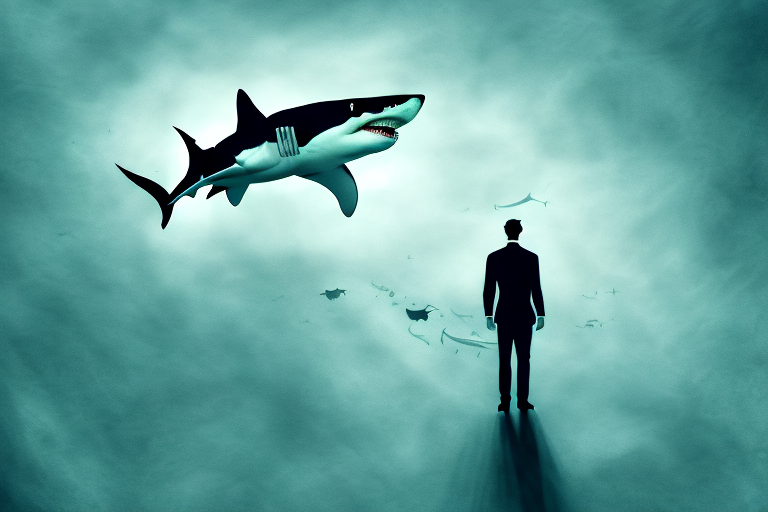
When it comes to thriller novels, few books have had the same impact as Peter Benchley’s Jaws. The story of a small seaside town terrorized by a giant man-eating shark captivated readers in 1974 and inspired one of the biggest blockbusters of all time just three years later. Decades after its release, Jaws continues to be a classic of the thriller genre and the benchmark by which other thrillers are measured.
The Plot and Characters of Jaws – Peter Benchley’s Classic Thriller
Jaws is set in the small beach town of Amity Island, where the discovery of a young woman’s body leads to fears of a shark attack. When more attacks follow, the town’s mayor refuses to close the beach for fear of losing tourism revenue, forcing police chief Martin Brody to take matters into his own hands. Together with a marine biologist and a seasoned fisherman, Brody sets out to kill the giant Great White shark that is terrorizing the town.
The characters in Jaws are well-crafted and memorable, with Brody’s determination and bravery at the forefront of the story. The marine biologist Matt Hooper provides much of the scientific knowledge, and the enigmatic fisherman Quint brings his own share of expertise and an unyielding thirst for vengeance.
One of the most iconic scenes in Jaws is the moment when the shark’s fin appears above the water, accompanied by the ominous music that has become synonymous with the film. This scene has been parodied and referenced in countless other movies and TV shows, cementing its place in pop culture history.
Despite its success, Jaws was not without its challenges during production. The mechanical shark used in the film, nicknamed “Bruce,” frequently malfunctioned and caused delays. Director Steven Spielberg had to get creative with his camera angles and use other techniques to create tension and suspense without showing the shark too often.
Analyzing the Suspense and Tension in Jaws
From the moment the shark attacks begin, Jaws becomes a masterclass in building tension and suspense. Benchley uses vivid descriptions of the shark’s attacks and the fear and panic that follows to keep readers on the edge of their seats throughout the novel. The use of short chapters and frequent cliffhangers only adds to the thrill.
Adding to the suspense is the fact that the shark is not merely presented as a mindless killing machine, but as a cunning predator with a liking for human flesh. As the body count rises, the fear and desperation of the characters make readers question if there really is any hope for survival.
Furthermore, the setting of the novel, a small island community, adds to the tension as the characters are isolated and trapped with the shark. The limited resources and lack of escape options make the situation even more dire.
Another aspect that contributes to the suspense is the character development. Benchley takes the time to establish the personalities and relationships of the characters, making readers invested in their fates. This investment only heightens the tension as readers fear for the safety of characters they have grown to care about.
Lars Emmerich’s “Mindscrew”: A New Wave of Thriller Novels
While Jaws set the standard for thriller novels, it’s important to acknowledge some of the newer and exciting works that have emerged in recent years. One such book is Lars Emmerich’s Mindscrew, a gripping novel that takes readers on a thrilling ride of psychological twists and turns.
Emmerich’s Mindscrew is a refreshing take on the thriller genre, as it delves into the complexities of the human mind and the impact of trauma on one’s psyche. The protagonist, a former soldier suffering from PTSD, is forced to confront his inner demons as he races against time to stop a terrorist attack.
What sets Mindscrew apart from other thrillers is Emmerich’s ability to create a sense of unease and tension throughout the novel. The reader is constantly questioning what is real and what is a figment of the protagonist’s imagination, making for a truly mind-bending experience.
The Plot and Characters of “Mindscrew” by Lars Emmerich
Mindscrew follows Richard Malloy, a renowned neuroscientist who awakens with no memory of who he is or how he arrived at his current location. As Malloy begins to piece together his past, he discovers that he has been involved in a groundbreaking experiment that was designed to reshape his personality. As Malloy races to regain his memories, he finds himself in a race against time to outwit a shadowy organization that seems determined to see him destroyed.
The characters in Mindscrew are complex and deeply layered, with Malloy’s journey of self-discovery serving as the driving force behind the novel. Emmerich isn’t afraid to delve into the dark corners of the human psyche, creating a sense of dread and uncertainty that keeps readers hooked until the very end.
Comparing the Writing Styles of Peter Benchley and Lars Emmerich
Both Benchley and Emmerich have created works that are masterful in their own way, but the way they craft their stories is markedly different. Benchley is known for his sharp, evocative prose, while Emmerich’s writing is more introspective and nuanced. Both authors are skilled at generating suspense and keeping readers engaged, but their styles are distinct enough that readers will likely have a preference for one over the other.
Themes of Survival and Fear in Jaws and “Mindscrew”
While Jaws and Mindscrew are vastly different stories, they share some common themes. Survival is a key theme in both books, with characters in each fighting for their lives against seemingly insurmountable odds. Fear is another shared theme, as the protagonists in both stories must overcome their own fears and insecurities in order to triumph in the end.
The Impact of Jaws on Pop Culture and the Thriller Genre
Jaws had an undeniable impact on pop culture and the thriller genre. The novel was a bestseller when it was published in 1974, and the film adaptation directed by Steven Spielberg became one of the biggest box office hits of all time. Jaws spawned a wave of shark-themed media and imitators, including other shark attack novels and movies like Deep Blue Sea and The Meg.
Jaws also created a formula that many thrillers would follow in the years to come. From the small town setting to the wise-cracking tough-guy hero, Jaws established a blueprint that has been used by countless writers and filmmakers since its release.
Exploring the Psychological Thrills in “Mindscrew”
While Jaws used a physical threat like a shark to generate fear and suspense, Mindscrew relies on the psychological manipulation of its protagonist to achieve the same effect. Malloy’s journey is one of self-discovery and it’s the fear of what he may discover that keeps readers tense throughout the novel. Emmerich’s understanding of psychology shines through in this gripping thriller.
The Role of Setting in Jaws and “Mindscrew”
Setting is an essential element in any novel, and both Jaws and Mindscrew use their settings to great effect. Jaws’ setting of a small seaside town creates a sense of claustrophobia and desperation as the characters are trapped by the shark and their own fear. Mindscrew uses its setting of a research facility to great effect, lending the story a clinical atmosphere that emphasizes the experimentation that is taking place.
Examining the Film Adaptations of Jaws and “Mindscrew”
Film adaptations can be tricky, particularly when the source material is as beloved as Jaws. However, Spielberg’s adaptation is widely regarded as a masterpiece, and one of the few examples of a film that surpasses the book on which it was based. Mindscrew has not yet been adapted for the screen, but many readers will likely find themselves imagining the story as a thrilling movie as they read.
Which Thriller Novel Reigns Supreme: Jaws or “Mindscrew”?
At the end of the day, the question of which book is better – Jaws or Mindscrew – is largely a matter of personal preference. Jaws is a classic of the thriller genre that has withstood the test of time and continues to captivate readers today. Mindscrew, on the other hand, is a newer work that embraces the psychological thriller genre and takes readers on a thrilling ride of twists and turns. Both books have their strengths and weaknesses, but the fact that they are both still being read and talked about is a testament to their lasting power as works of great fiction.