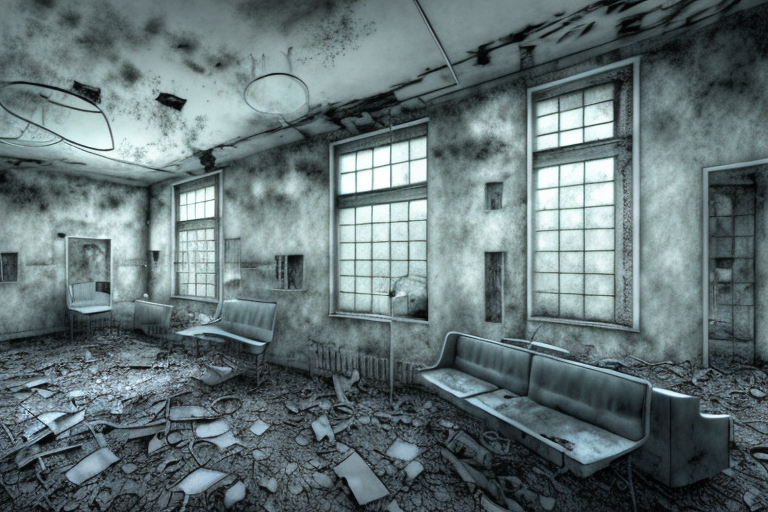
In today’s world, many individuals are fascinated by the horror genre, especially stories that revolve around abandoned mental asylums. These settings have become so popular in mystery and thriller fiction that they’ve become a staple part of the genre, always delivering a unique sense of psychological terror that will keep readers glued to the pages.
Exploring the History of Abandoned Mental Asylums
Mental asylums were intended to be safe havens where individuals with mental health issues could receive the necessary treatment they needed to improve their quality of life. However, many of these institutions had a dark side, with instances of patients being mistreated or neglected by their caregivers. The horror associated with these institutions is often a result of their gloomy surroundings, scattered with leftover equipment and furniture that serve as a chilling reminder of the patients who once dwelled within the walls.
Despite the negative reputation of mental asylums, it is important to acknowledge the positive impact they had on the field of mental health. Many of the treatments and therapies used today were developed within the walls of these institutions. Additionally, mental asylums played a crucial role in reducing the stigma surrounding mental illness and promoting the idea that mental health is just as important as physical health. While the history of abandoned mental asylums may be haunting, it is important to remember the progress that has been made in the field of mental health and the ongoing efforts to improve the lives of those struggling with mental illness.
The Rise and Fall of Mental Health Institutions in the United States
The history of mental health institutions in the United States dates back to the 1800s, where there was an attempt to provide care for individuals who suffered from mental health issues. However, many of these institutions operated in conditions that were inhumane, instead of providing a healing environment. The government finally intervened and, over the years, initiated programs that led to the eventual closure of many of these institutions.
Despite the closure of many mental health institutions, the issue of mental health care in the United States remains a challenge. Many individuals still struggle to access affordable and quality mental health care, leading to a rise in homelessness, incarceration, and suicide rates. Efforts are being made to address this issue, including the expansion of mental health services in primary care settings and the implementation of telehealth services. However, there is still a long way to go in ensuring that all individuals have access to the mental health care they need.
The Appeal of Haunted Places in Horror Fiction
Fear is a primal emotion that can be triggered in a variety of ways. The human psyche is drawn to the unknown or the unexplained. The fear of the supernatural or the possibility that ghosts or spirits linger in abandoned asylums evokes feelings of terror and unease in many individuals. Using these settings in storytelling is a way to tap into this primal fear to keep readers on the edge of their seats.
Moreover, haunted places in horror fiction often serve as a metaphor for the characters’ internal struggles. The ghosts or spirits that haunt these places can represent the characters’ past traumas or unresolved issues. By confronting these supernatural entities, the characters are forced to confront their own inner demons and overcome them. This adds a deeper layer of meaning to the story and makes it more relatable to readers who may also be struggling with their own personal demons.
Understanding the Psychology Behind Fear and Suspense in Fiction
To create a great thriller or horror story, authors need to have a deep understanding of the human psyche. The psychological aspect of storytelling is what makes these stories so appealing. Creating fear and suspense is all about getting into the reader’s mind and making them feel as though they’re experiencing the events of the story alongside the characters.
One of the most effective ways to create fear and suspense in fiction is through the use of ambiguity. By leaving certain details unclear or open to interpretation, authors can create a sense of unease and uncertainty in the reader. This can be achieved through the use of unreliable narrators, ambiguous descriptions of events, or leaving certain plot points unresolved until later in the story. By keeping the reader guessing, authors can maintain a sense of tension and anticipation throughout the narrative, making for a truly gripping reading experience.
Lars Emmerich’s Top 10 Favorite Mystery and Thriller Tropes
Lars Emmerich is a well-known author of mystery and thriller fiction, with a deep love for abandoned mental asylums. His favorite tropes include settings that are isolated or confined, the use of mistaken identity, unreliable narrators, and the classic “locked room” mystery. Emmerich also points out the importance of creating engaging characters whose motivations add to the intrigue of the story.
Another favorite trope of Emmerich’s is the use of red herrings, which are false clues or misleading information that divert the reader’s attention from the true solution to the mystery. He believes that a well-placed red herring can add an extra layer of complexity to the plot and keep readers guessing until the very end.
In addition, Emmerich enjoys incorporating elements of the supernatural or paranormal into his mysteries and thrillers. He believes that these elements can add a sense of unease and mystery to the story, and can also provide a unique twist on traditional mystery tropes. However, he cautions that it’s important to balance these elements carefully, so that they don’t overwhelm the story or detract from the overall sense of realism.
The Role of Setting in Creating a Chilling Atmosphere
The setting of a story can play a significant role in setting the tone for the story. Abandoned mental asylums are perfect for creating a sense of dread, as these locations are often dimly-lit, with eerie corridors, dark corners, and the lingering scent of death. These elements work together to create an environment that is both chilling and terrifying.
In addition to abandoned mental asylums, other settings can also contribute to creating a chilling atmosphere. For example, a dense forest at night can be unsettling, with the rustling of leaves and the howling of animals adding to the sense of danger. Similarly, an isolated cabin in the middle of nowhere can create a feeling of vulnerability and helplessness, as the characters are cut off from civilization and any potential sources of help. By carefully selecting the setting of a story, writers can effectively manipulate the emotions of their readers and create a truly chilling experience.
The Use of Foreshadowing to Build Tension in Horror Stories
Foreshadowing is a technique used by authors to create a sense of anticipation in their readers. In horror stories, foreshadowing can be used to hint at the terrifying events that are yet to come, creating an atmosphere of unease and dread. When done well, foreshadowing can heighten the reader’s sense of anticipation and make the pay-off all the more satisfying.
Analyzing the Themes of Isolation and Madness in Horror Fiction
Horror stories often deal with themes of isolation and madness. This concept is especially relevant to abandoned mental asylums, where individuals were often isolated from the rest of society. These individuals often suffered from a range of mental health issues that would cause them to act erratically, giving rise to tales of madness and horror.
Why Some People are Fascinated with the Macabre and Dark Fiction
For many individuals, the fascination with horror and dark fiction is simply the thrill of the unknown. Human beings are wired to seek out novelty and explore new territories, and horror fiction can provide a way to experience new and exciting sensations in a safe environment. For others, the appeal of horror stems from a desire to explore the darker side of humanity, to confront fear, and to test their emotional resilience.
Conclusion
In summary, abandoned mental asylums continue to be a popular setting in mystery and thriller fiction. With a history that is often horrific and a setting that evokes a sense of unease, these locations offer an ideal backdrop for tales of terror and suspense. Understanding the psychology behind horror and thriller fiction is critical to creating stories that will keep readers engaged. In the end, it’s the characters, setting, and storytelling that make these stories stand out, and when done well, they can deliver an unparalleled reading experience. So, step into the dark and explore the abandoned mental asylum in all its macabre splendor.