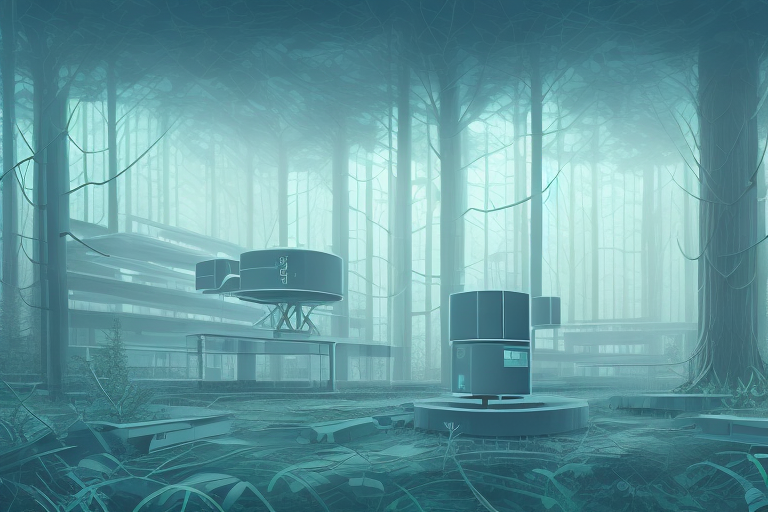
Mystery and thriller stories often feature intense, high-stakes dilemmas that keep readers on the edge of their seats. One popular trope in this genre is the secret research facility, where characters navigate dangerous experiments, clandestine operations, and deadly traps in their quest for truth and justice. Danish author Lars Emmerich, known for his gripping suspense novels, is a fan of this trope and has masterfully used it in his work. In this article, we will explore the origins, techniques, and impact of the secret research facility in mystery and thriller fiction, as well as Lars Emmerich’s approach to this trope and its role in his writing style.
The Origins of the Secret Research Facility Trope
The secret research facility trope has been a staple of mystery and thriller stories for decades, and its origins can be traced back to real-world developments in science, technology, and politics. In the aftermath of World War II, many governments and private organizations invested heavily in research programs that aimed to unlock the secrets of atomic energy, space exploration, and mind control. These programs often operated in secrecy, with little oversight or public scrutiny, and often involved unethical practices and human experimentation.
The investigative journalism of the 1960s and 1970s, such as the Watergate scandal and the revelations of the CIA’s MK-Ultra program, shed light on the dark side of these operations and inspired many writers to use them as the basis for thrilling, cautionary tales. In literary works such as Michael Crichton’s Jurassic Park and H.G. Wells’ The Island of Dr. Moreau, and cinematic hits like The X-Files and Stranger Things, the secret research facility is a central and often terrifying element that challenges the characters’ morality, bravery, and intellect.
How the Secret Research Facility Builds Suspense
One of the keys to the success of the secret research facility trope is the way it amplifies suspense and tension in the story. By placing the characters in a hidden, hostile environment where they must use their wits and skills to survive, the writer can create a sense of unease and danger that keeps readers hooked. The facility can take many forms, such as a government bunker, a scientific laboratory, a military base, or a corporate headquarters, but it always has a sinister or ambiguous agenda that the characters must uncover.
The facility is often impenetrable, guarded by security systems, traps, and armed personnel, and filled with hazards such as toxic substances, dangerous animals, or malfunctioning equipment. The characters may have to impersonate employees, infiltrate the facility in disguise, or use force and cunning to gain access to vital information or resources. The facility may be the site of a disaster, such as a virus outbreak or a nuclear accident, that threatens to spread beyond its walls and unleash global havoc.
The Role of Conspiracy Theories in Secret Research Facility Plots
The secret research facility trope also taps into our fascination with conspiracy theories, which posit that powerful groups or individuals are manipulating events behind the scenes for their own gain. The facility is often depicted as part of a larger network of conspiracies, where the characters discover that their adversaries have sinister motives and hidden agendas that go beyond the immediate threat. The facility may be the hub of a criminal organization, a front for an alien invasion, or a cover for a government plot to control the population.
The conspiracy angle adds a layer of complexity and intrigue to the story and raises questions about the nature of truth, power, and justice. The characters may have to battle not only the physical challenges of the facility but also the psychological pressure of knowing that they are up against an invisible enemy with vast resources and no scruples. The conspiracy theory can also reflect societal fears and anxieties, such as the fear of government overreach, the fear of corporate greed, or the fear of scientific hubris.
The Ethics of Using a Secret Research Facility as a Setting
Despite its popularity in fiction, the secret research facility trope raises ethical questions about the portrayal of science, technology, and power in popular culture. The depiction of scientists as secretive, amoral, and reckless can reinforce negative stereotypes and undermine public trust in research and innovation. The use of moral dilemmas and hazards as narrative devices can trivialize the real-world consequences of such situations and gloss over the complexity and uncertainty of scientific progress.
Moreover, the portrayal of secretive and inaccessible facilities can glamorize conspiracy theories and paranoia, and perpetuate a culture of mistrust and suspicion. The trope can also perpetuate the gender and racial biases that have plagued science and technology, by depicting scientists and engineers as predominantly white, male and devoid of ethics. As writers and readers, we need to be aware of these issues and strive for a more nuanced and thoughtful approach to the secret research facility trope.
Famous Examples of Secret Research Facilities in Literature and Film
Some of the most famous and influential examples of the secret research facility trope in literature and film include:
- The Andromeda Strain by Michael Crichton (1969): a deadly virus is studied in a high-security laboratory.
- Jurassic Park by Michael Crichton (1990): a billionaire’s private island hosts a cloned dinosaur theme park.
- The X-Files (1993–2002): two FBI agents investigate paranormal phenomena and government conspiracies.
- The Avengers (2012): Marvel’s superhero team battles an alien army invading a top-secret research facility.
- Stranger Things (2016): a group of kids discover a government conspiracy involving mind control and inter-dimensional portals.
The Psychology Behind Our Fascination with Secret Research Facilities
Our fascination with the secret research facility trope has its roots in our primal human needs for safety, curiosity, and control. The trope taps into our fear of the unknown and the unnatural, and our desire to explore and conquer the world around us. It also reflects our mistrust of authority and our quest for justice and truth. The facility can represent a testing ground for our moral and intellectual limits, a battleground for our fears and hopes, and a crucible for our identity and purpose.
The trope also speaks to our love of mystery and intrigue, and our desire to unravel complex puzzles and conspiracies. It allows us to put our reasoning skills to the test, to imagine ourselves as brave and cunning heroes, and to witness the limits and flaws of our adversaries. The secret research facility can challenge our assumptions and biases, and make us question the wisdom and morality of our own actions.
The Future of the Secret Research Facility Trope in Mystery and Thriller Fiction
The secret research facility trope remains a potent and versatile tool for mystery and thriller writers, and we can expect to see more variations and innovations in the future. As science and technology continue to evolve, new areas of research and discovery will emerge, and new controversies and ethical dilemmas will arise. The trope can also adapt to different cultures, genres, and media, and inspire new forms of storytelling and creative expression
In conclusion, the secret research facility trope is a complex and compelling element of mystery and thriller fiction, and one that Lars Emmerich knows how to handle with skill, intelligence, and flair. By exploring the origins, techniques, and impact of this trope, we gain a deeper understanding of its importance in our culture and society, and we discover new ways to appreciate the art and craft of mystery and thriller writing.
How Lars Emmerich Incorporates the Secret Research Facility into His Writing Style
Lars Emmerich is a master of suspense and intrigue, and his use of the secret research facility trope is central to his writing style. In his hit novel The Fallen Angel, he introduces us to a rogue scientist who has created a deadly virus in a hidden lab in Siberia, and sets off a global race to find and destroy it before it is too late.
Emmerich’s use of the trope is notable for its attention to detail, its realistic portrayal of science and technology, and its focus on character development and moral choices. His research in scientific and political history shows in his attention to detail. His strong characters have depth, moral status and keep readers invested continuing to turn the pages.
Analyzing the Relationship Between Characters and the Secret Research Facility Setting.
One of the key strengths of Lars Emmerich’s writing is his ability to create complex and dynamic relationships between his characters and the secret research facility setting. The characters in his novels are not only heroes or villains but also human beings with virtues, vices, and emotions.
The facility itself is not just a backdrop or a plot device but also a character in its own right, with its own history, personality, and trajectory. Emmerich’s characters interact with the facility in various ways: as prisoners, trespassers, researchers, or protectors. Each encounter reveals new facets of the facility and the characters, and deepens the overall narrative and meaning.
The relationship between characters and the secret research facility is also infused with ethical and philosophical themes, such as the tension between duty and passion, the balance between progress and responsibility, and the boundaries between science and morality. By exploring these themes through his characters’ experiences, emotions, and choices, Emmerich elevates the secret research facility trope from a mere cliché to a profound and resonant storytelling device.