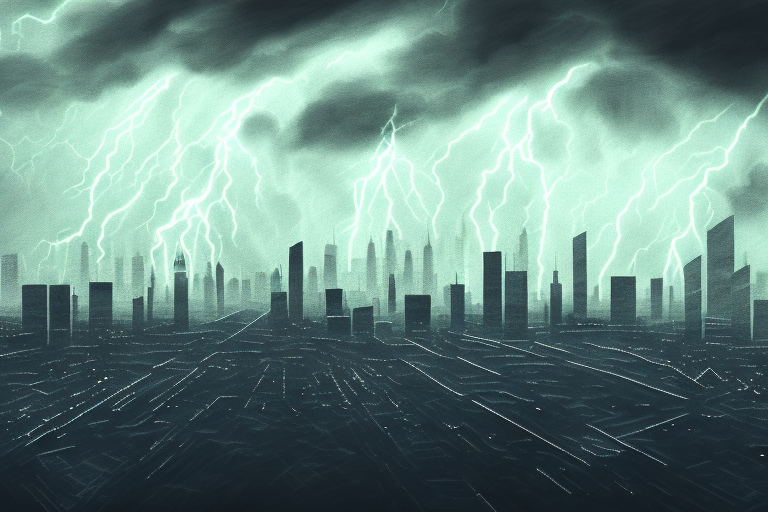
If you’re a fan of thriller novels, you’ve likely come across Gillian Flynn’s “Gone Girl” and Lars Emmerich’s “Meltdown.” Both novels have captured readers’ attention with their intricate plots, compelling characters, and suspenseful twists and turns. But how do they compare when it comes to key elements that make a great thriller? In this article, we’ll dive deep into the similarities and differences between “Gone Girl” and “Meltdown,” exploring their plot twists, characters, writing style, themes, and more.
Analyzing the Plot Twists and Turns: A Closer Look at Both Novels
One of the most essential components of a successful thriller is a plot that keeps readers on the edge of their seat. “Gone Girl” and “Meltdown” both bring significant twists and revelations throughout the story that leave readers desperate to know what happens next. Flynn and Emmerich both excel in building suspense and crafting intricate plot twists that make it impossible to predict what’s coming next.
“Gone Girl” revolves around the disappearance of Amy Dunne and the ensuing investigation into her husband Nick’s involvement. As the story unfolds, readers are led along a twisting path of unreliable narrators, surprise revelations, and shocking plot twists that keep the story fresh and unpredictable. In contrast, “Meltdown” centers on a devastating cyber attack on US infrastructure, where the stakes are high and the threat is very real. While the plot may not have as many twists and turns as “Gone Girl,” it’s still a gripping story that pulls readers along on a pulse-pounding ride.
One interesting aspect to note is the different approaches taken by the authors in revealing the plot twists. In “Gone Girl,” the twists are slowly revealed through alternating perspectives and unreliable narrators, while in “Meltdown,” the twists are revealed through a series of shocking events that occur in rapid succession. This difference in approach adds to the unique reading experience of each novel and showcases the versatility of the thriller genre.
Exploring the Main Characters: Amy Dunne vs. Jake Pendleton
Great thrillers need great characters, and both “Gone Girl” and “Meltdown” deliver in this department. In “Gone Girl,” the two main characters are Amy Dunne and her husband Nick. Flynn’s masterful use of the unreliable narrator means that readers are never quite sure who they can trust, and the characters are richly drawn and full of surprises. Emmerich’s “Meltdown” also features a compelling protagonist in Jake Pendleton, a former SEAL who becomes embroiled in the cyber attack plot. Pendleton’s background and personality make him an immediately likable and relatable character, and readers are drawn into his journey as he races against time to stop the attackers.
Despite their differences, both Amy Dunne and Jake Pendleton share a common trait: they are both incredibly determined individuals. Amy’s determination is evident in her meticulous planning and execution of her revenge plot, while Jake’s determination is showcased through his unwavering commitment to stopping the cyber attackers, even when faced with seemingly insurmountable obstacles. This determination not only makes them interesting characters to follow, but also adds an extra layer of tension and excitement to the stories they inhabit.
The Role of Suspense: How Flynn and Emmerich Use It to Keep Readers Engaged
Thriller novels thrive on suspense, and both “Gone Girl” and “Meltdown” use this essential element to keep readers hooked from beginning to end. In “Gone Girl,” Flynn expertly builds tension and suspense by slowly peeling away the layers of her characters and revealing their secrets. The dual perspectives of Nick and Amy also add to the suspense, as readers are never quite sure which character they can trust. Emmerich’s “Meltdown” also takes advantage of the suspenseful setting and tight timeline to keep readers engaged. As the cyber attack plot advances, readers are constantly on the edge of their seat wondering what will happen next and whether Pendleton will be able to stop the attack in time.
Moreover, both authors use suspense to create a sense of urgency and danger. In “Gone Girl,” the disappearance of Amy and the suspicion that falls on Nick create a sense of impending doom. As the story progresses, the stakes get higher and the danger becomes more palpable. Similarly, in “Meltdown,” the threat of a catastrophic cyber attack on the United States creates a sense of urgency and danger that keeps readers invested in the story.
Finally, both authors use suspense to explore deeper themes and ideas. In “Gone Girl,” Flynn uses suspense to examine the nature of marriage and the lengths people will go to protect their secrets. In “Meltdown,” Emmerich uses suspense to explore the vulnerabilities of our interconnected world and the potential consequences of a cyber attack. By using suspense in these ways, both authors create stories that are not only thrilling but also thought-provoking and meaningful.
The Psychology of the Protagonists: A Comparative Study of Amy and Jake
Both “Gone Girl” and “Meltdown” delve deep into the psychology of their main characters, presenting readers with flawed and complex protagonists. “Gone Girl” explores the twisted psychology of Amy Dunne, a woman who will stop at nothing to get what she wants. Flynn’s portrayal of Amy as a manipulative and calculating character is chilling and unforgettable. In “Meltdown,” Jake Pendleton’s experiences as a former SEAL inform his actions and decisions throughout the story. Emmerich’s portrayal of the character as both strong and vulnerable creates a compelling protagonist that readers will root for until the very end.
Setting the Scene: Examining the Settings and Atmosphere of Both Novels
Creating a vivid and immersive setting is essential to any novel, but particularly important in thrillers where the environment is often used to ratchet up the tension and suspense. “Gone Girl” takes place in a small town in Missouri, where the claustrophobic atmosphere of the community plays a significant role in the story. The use of multiple settings, including the Dunne’s home and Nick’s workplace, helps to create a fully-realized world that readers can easily imagine themselves in. “Meltdown” is set in a frighteningly realistic version of modern-day America, where the threat of a devastating cyber attack looms over everything. Emmerich’s careful attention to detail in setting the scene helps to create a palpable sense of danger that makes the story all the more gripping.
The Writing Style: Comparing Flynn’s and Emmerich’s Approaches to Language and Narrative
The style of writing in a thriller can make all the difference between a book that falls flat and one that keeps readers engaged until the very last page. Flynn’s writing in “Gone Girl” is sharp, witty, and carefully crafted. Her use of unreliable narrators and clever dialogue perfectly encapsulates the characters’ personalities and keeps the story moving. Emmerich’s writing style in “Meltdown” is similarly effective, with a fast-paced narrative and a keen eye for detail that make the story feel immediate and urgent. Both authors are skilled at crafting compelling characters and using language to create mood and atmosphere.
Themes of Deception and Betrayal: How Both Authors Reveal These Themes Throughout Their Novels
Deception and betrayal are recurring themes in both “Gone Girl” and “Meltdown.” In “Gone Girl,” the characters are constantly deceiving each other, and the story is full of surprise twists that reveal the extent of their betrayal. Amy’s character is particularly adept at deception, as she manipulates and lies her way through the story. In “Meltdown,” the theme of betrayal is more subtle but just as effective. Jake Pendleton’s journey is one of betrayal by his government and his colleagues, and readers are drawn into his struggle to uncover the truth and stop the cyber attackers.
Reception of the Novels: A Look at Critical Response and Public Opinion
Both “Gone Girl” and “Meltdown” have been widely praised by critics and readers alike. “Gone Girl” has been called a modern classic of the thriller genre, and the movie adaptation further cemented its reputation as a must-read. “Meltdown” has also received strong reviews, with readers noting its relevance to current events and its fast-paced plot. While there are certainly differences in opinion on which novel is the better thriller, both have found an enthusiastic audience and remain popular today.
Conclusion: Which Novel Comes Out on Top?
Ultimately, the question of which novel is better is a matter of personal preference. Fans of psychological thrillers will likely gravitate towards “Gone Girl,” with its complex characters and twisted plot twists. Readers interested in the terrifying possibilities of modern technology and the looming threat of cyber attacks may find “Meltdown” more to their liking. However, both novels represent the best of the thriller genre, with skilled writing, strong characterization, and suspenseful plot twists that keep readers hooked until the very last page.