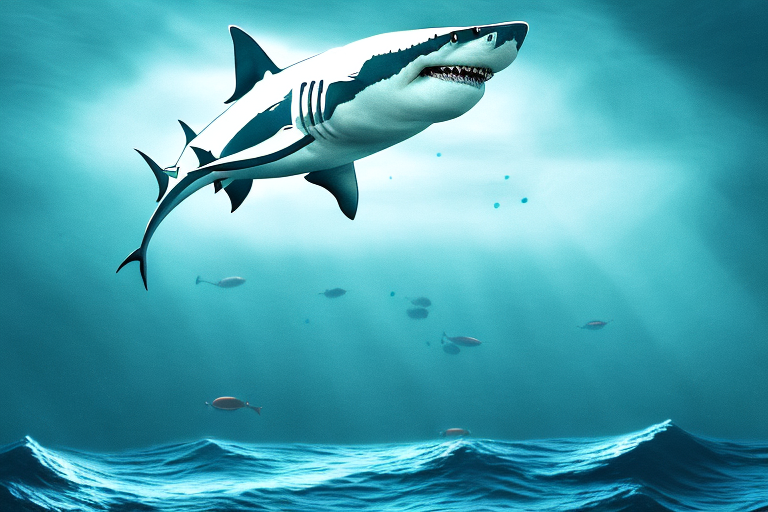
When it comes to the thriller genre, there are countless novels to choose from, each with its own unique qualities and strengths. In this article, we will be comparing two standout examples of thrillers: Jaws by Peter Benchley and Deep Fake by Lars Emmerich. Through analyzing the plot, characters, writing style, and themes of each novel, we’ll explore what sets them apart and what makes them both important contributions to the genre.
A brief introduction to the two novels
Jaws, published in 1974, follows police chief Martin Brody as he investigates a series of shark attacks in the small town of Amity. As he tries to protect the town from further harm, he must confront his own fears and doubts. Deep Fake, published in 2018, tells the story of a wealthy businessman who fakes his death and takes on a new identity to uncover a conspiracy within his own company.
Jaws, written by Peter Benchley, was inspired by a real-life incident in which a fisherman caught a 4,500-pound great white shark off the coast of Long Island. The novel was a bestseller and was later adapted into a blockbuster movie directed by Steven Spielberg. The success of Jaws helped to establish the genre of the summer blockbuster and made Benchley a household name.
Deep Fake, written by Stuart Russell, explores the dangers of artificial intelligence and the potential consequences of creating machines that are smarter than humans. The novel takes its name from a technique used to create realistic videos of people saying and doing things they never actually did. The use of deep fake technology has raised concerns about the spread of misinformation and the erosion of trust in media and public figures.
Understanding the thriller genre and its significance in literature
The thriller genre is known for its suspenseful, often heart-pounding plotlines and its focus on characters grappling with danger and mystery. The genre has a long history, dating back to the Gothic novels of the 18th century, but has evolved over time to include a variety of sub-genres and new techniques for building tension.
One of the key elements of the thriller genre is the use of plot twists and unexpected turns. These twists keep the reader engaged and guessing, and often lead to a satisfying payoff at the end of the story. Additionally, thrillers often explore complex themes such as morality, justice, and the human psyche, making them more than just simple entertainment.
Despite its popularity, the thriller genre has faced criticism for its sometimes formulaic nature and reliance on shock value. However, many authors have pushed the boundaries of the genre, experimenting with structure and style to create truly unique and thought-provoking works. Overall, the thriller genre remains an important and influential part of literature, captivating readers with its gripping plots and complex characters.
Analyzing the plot and characters of Jaws by Peter Benchley
The plot of Jaws is relatively simple, but what makes the novel stand out is the way Benchley builds suspense throughout. The shark attacks create a sense of impending doom, and Brody’s struggle to protect his community is complicated by political and personal obstacles. The characters in Jaws are also well-drawn, with Brody’s doubts and fears making him a relatable protagonist.
One of the most interesting aspects of Jaws is the way Benchley uses the shark as a metaphor for larger societal issues. The shark represents the fear and danger lurking beneath the surface of seemingly idyllic communities, and the struggle to defeat it mirrors the struggle to confront and overcome these deeper issues. Additionally, the novel can be read as a commentary on the dangers of unchecked capitalism, as the town’s leaders prioritize profits over safety, leading to disastrous consequences.
Despite its success as a novel, Jaws has also been criticized for its portrayal of sharks as mindless killing machines. In reality, sharks are an important part of the ocean ecosystem and are not typically a threat to humans. Benchley himself later became an advocate for shark conservation and regretted perpetuating negative stereotypes about these creatures.
Exploring the writing style and techniques used by Peter Benchley in Jaws
Benchley’s writing style in Jaws is notable for its use of descriptive language to create vivid images of the ocean and its dangers. He also uses multiple perspectives to give readers a sense of the different characters’ motivations and perspectives. The novel is well-paced, with moments of action and tension balanced by moments of quiet introspection from the characters.
In addition to his writing style, Benchley’s use of real-life events and scientific research adds a layer of authenticity to the novel. He drew inspiration from real shark attacks and consulted with experts in marine biology to accurately depict the behavior and anatomy of great white sharks. This attention to detail not only adds to the suspense of the story, but also educates readers on the dangers of these creatures and the importance of ocean conservation.
An overview of Deep Fake by Lars Emmerich
Deep Fake, like Jaws, centers around a protagonist struggling to uncover a hidden danger. The novel is set in the world of corporate espionage, and the plot is full of twists and turns as the main character uncovers sinister dealings within his own company.
The use of deep fake technology has become increasingly prevalent in recent years, with the ability to create convincing fake videos and images. Emmerich’s novel explores the potential dangers of this technology and the impact it could have on society if it falls into the wrong hands.
Throughout the book, Emmerich also delves into the ethical implications of deep fake technology, questioning the morality of using it for personal gain or to manipulate public opinion. The novel serves as a cautionary tale, highlighting the need for responsible use and regulation of this powerful technology.
Comparing the themes and motifs of Jaws and Deep Fake
Both Jaws and Deep Fake explore the theme of trust, as the characters must navigate dangerous waters (literally and metaphorically) while figuring out who they can rely on. Additionally, both novels touch on the dangers of technology, with Jaws portraying the shark as a natural predator that humans cannot fully understand, and Deep Fake exploring the power of social media and artificial intelligence.
However, while Jaws focuses on the physical danger posed by the shark, Deep Fake delves into the psychological dangers of technology. The novel highlights how easy it is to manipulate and deceive people through the use of deep fake technology, which can create convincing fake videos and images. This raises important questions about the reliability of information in the digital age and the potential consequences of trusting what we see online.
Examining the similarities and differences in the protagonists of the two novels
While both novels feature protagonists struggling to uncover a hidden danger, the characters of Martin Brody and the protagonist of Deep Fake are vastly different. Brody is a police chief who is initially hesitant to take action, while the protagonist of Deep Fake is a wealthy businessman who takes matters into his own hands. However, both characters face personal and ethical dilemmas as they pursue their investigations.
Analyzing the role of technology in both Jaws and Deep Fake
The role of technology in both novels is complex. In Jaws, Benchley portrays the shark as a natural predator that humans cannot fully understand, highlighting the limitations of technology in the face of nature’s power. In Deep Fake, technology is both a tool for uncovering the truth and a weapon in the hands of the powerful.
The impact of these novels on the thriller genre and popular culture
Both Jaws and Deep Fake have had a significant impact on the thriller genre and popular culture as a whole. Jaws, in particular, helped to establish the “man vs. nature” sub-genre of thriller and inspired the hit movie of the same name. Deep Fake, with its focus on the dangers of technology, is timely and relevant in an age where social media and fake news are becoming increasingly problematic.
In conclusion, while Jaws and Deep Fake are different in many ways, they both offer important contributions to the thriller genre. Through analyzing their plots, characters, writing styles, and themes, we can see what makes them unique and valuable parts of the literary landscape.