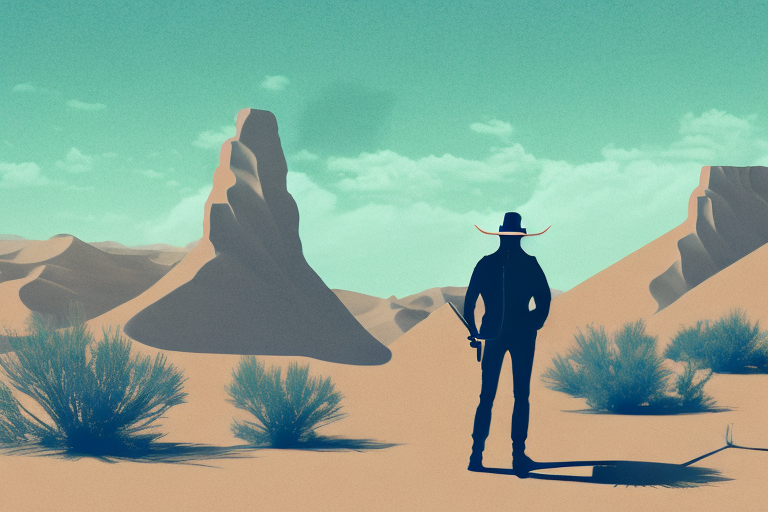
When discussing the thriller genre, two novels that come to mind are Stephen King’s The Gunslinger and Lars Emmerich’s Fallout. Both novels offer readers thrilling stories with captivating protagonists and antagonists, vivid settings, and supernatural elements. In this article, we will compare and contrast the two novels to see which one better represents the thriller genre.
A Brief Overview of Stephen King’s The Gunslinger
The Gunslinger is the first book in King’s Dark Tower series. It introduces readers to the protagonist, Roland Deschain, the last gunslinger of Mid-World, a world resembling the Wild West with some technological advancements. The novel follows Roland’s quest to find the Dark Tower, a mythical structure that holds the key to saving his dying world. Along the way, he meets various characters, including Jake Chambers, a boy from another world who becomes his companion. However, Roland’s journey is not a simple one, as he faces numerous obstacles and adversaries, both human and supernatural.
One of the most interesting aspects of The Gunslinger is the way King blends genres. While the book is primarily a fantasy novel, it also incorporates elements of horror, westerns, and science fiction. This unique blend of genres creates a world that is both familiar and strange, and keeps readers on their toes as they never know what to expect next. Additionally, King’s vivid descriptions of Mid-World and its inhabitants make the world feel alive and immersive, drawing readers in and making them feel like they are a part of Roland’s journey.
A Synopsis of Lars Emmerich’s “Fallout”
Fallout tells the story of Jack Harper, a former special forces operative turned freelance soldier of fortune. The novel is set in a post-apocalyptic America, where a deadly virus has decimated the population, leaving only a few survivors struggling to survive in a harsh, lawless world. Jack is hired by a wealthy businessman to rescue his daughter, who was taken by a ruthless gang of mercenaries. As Jack embarks on his mission, he finds himself hunted by the very same gang that he was hired to take down. The novel is a high-octane thriller that keeps readers on the edge of their seats until the very end.
Emmerich’s vivid descriptions of the post-apocalyptic world in “Fallout” are both haunting and captivating. The novel explores the depths of human depravity and the lengths that people will go to in order to survive. Jack Harper’s character is complex and multifaceted, as he struggles with his own demons while trying to complete his mission. The action-packed plot is interspersed with moments of introspection and reflection, making “Fallout” a thought-provoking read that stays with you long after you’ve finished the last page.
The Themes and Motifs in The Gunslinger
The Gunslinger is a novel that explores various themes, including loss, obsession, destiny, and redemption. The novel also uses several motifs, such as the number 19, the color blue, and Jake’s recurring death, to enhance its narrative. King’s use of these themes and motifs makes the novel an intricate and layered story that rewards careful reading and analysis.
One of the most prominent themes in The Gunslinger is the idea of the journey. The novel follows the protagonist, Roland, as he travels through a desolate and dangerous landscape in pursuit of the Man in Black. This journey is not just physical, but also spiritual and emotional, as Roland confronts his past and struggles with his own morality. The novel also explores the theme of sacrifice, as Roland must make difficult choices and sacrifices in order to achieve his goal.
Another important motif in The Gunslinger is the concept of time. The number 19 appears throughout the novel, and is often associated with significant events or moments of change. Additionally, the novel’s nonlinear structure and frequent flashbacks add to the sense of time being fluid and malleable. This motif ties into the larger themes of destiny and fate, as Roland grapples with the idea that his journey may be predetermined and that he may not have control over his own actions.
The Narrative Style and Structure of Fallout
Fallout is a novel that uses a straightforward, action-packed narrative style. The novel is divided into three parts, each with its own set of challenges and action sequences. Emmerich’s use of short, punchy sentences and vivid descriptions creates a fast-paced story that is easy to follow.
A Comparative Analysis of the Protagonists in Both Novels
Both Roland Deschain and Jack Harper are compelling protagonists who face challenging circumstances. Roland’s determination to find the Dark Tower, despite the dangers and obstacles he faces, makes him a driven and focused character. Jack, on the other hand, is a reluctant hero who is forced to confront his past while facing seemingly impossible odds. Both characters are well-rounded and relatable, making them both excellent protagonists in their respective novels.
Examining the Antagonists: Roland Deschain vs Jack Harper
The Gunslinger’s main antagonist is the Man in Black, a mysterious figure who possesses supernatural powers and seeks to prevent Roland from finding the Dark Tower. The Man in Black is a character who embodies evil, and his motives and actions are shrouded in mystery. In contrast, Fallout’s primary antagonists are the gang of mercenaries that hunt down Jack Harper—a group of ruthless killers who have no qualms about killing anyone who stands in their way. Both novels have engaging antagonists who serve as formidable challenges to their respective protagonists.
Analyzing the Settings: Mid-World vs Post-Apocalyptic America
The settings of both novels are vastly different but equally captivating. Mid-World is a world that resembles the Wild West but has technological advancements, making it a unique and intriguing setting. On the other hand, Fallout’s post-apocalyptic America is a desolate wasteland filled with danger and uncertainty. Both settings are expertly crafted and serve as essential components of their respective novels.
The Role of Supernatural Elements in The Gunslinger and Fallout
Both The Gunslinger and Fallout contain supernatural elements that add layers of complexity to their stories. The Gunslinger includes magical artifacts, supernatural beings, and otherworldly powers that make it a unique and captivating novel. Similarly, Fallout features mutated creatures, mysterious entities, and other supernatural elements that enhance its post-apocalyptic setting. These elements serve as crucial plot devices that elevate both novels into thrilling reads.
Exploring the Symbolism in Both Novels
The Gunslinger and Fallout both use symbolism to enrich their narratives. From the significance of Roland’s guns to the use of the color blue in The Gunslinger, King uses symbolism to add layers of meaning to his novel. In contrast, Fallout uses symbolism to explore themes of power, betrayal, and sacrifice throughout its narrative. Both authors use symbolism to enhance their novels, making them more than simple adventure stories.
A Comparison of the Writing Styles and Techniques Employed by King and Emmerich
King and Emmerich have distinct writing styles that make their novels unique. King’s writing style is more descriptive, with an emphasis on character development and setting. Emmerich’s writing style, on the other hand, is more action-oriented, with an emphasis on plot and pacing. Both styles are effective, and both authors use techniques such as foreshadowing, flashbacks, and dialogue to create compelling stories.
The Significance of Action Sequences in Both Novels
Action sequences play a significant role in both novels. In The Gunslinger, action sequences are used to illustrate the gunslinging skills of Roland and showcase his determination to succeed in his quest. In Fallout, action sequences are used to showcase Jack’s combat skills and show the gravity of the situation he finds himself in. Both authors use action sequences to heighten the tension and keep readers engaged throughout the novels.
Examining the Critical Reception of The Gunslinger and Fallout
The Gunslinger and Fallout have both received critical acclaim from readers and reviewers. The Gunslinger is considered a classic in the Western and horror genres, while Fallout is praised for its fast-paced action and captivating storytelling. Both novels have been adapted into other forms of media, such as comics, films, and television series, demonstrating their continued popularity and relevance to audiences.
Which Novel is a Better Representation of the Thriller Genre?
Both The Gunslinger and Fallout are excellent examples of the thriller genre, offering captivating stories, compelling characters, and thought-provoking themes. However, The Gunslinger’s intricate narrative, well-crafted characters, and unique setting make it a better representation of the genre. Fallout is also an excellent thriller, but its straightforward narrative and emphasis on action make it more of an action-thriller hybrid.
Conclusion: A Final Verdict on Comparing The Gunslinger – Stephen King with Lars Emmerich’s “Fallout”
Comparing The Gunslinger – Stephen King with Lars Emmerich’s “Fallout” has shown us two excellent examples of the thriller genre. Both novels offer thrilling stories, memorable characters, and expertly crafted settings. The Gunslinger’s intricate narrative, themes, and motifs make it a better representation of the genre, while Fallout’s action-oriented plot and pacing make it more of an action-thriller hybrid. However, both novels are excellent reads that any fan of the thriller genre should check out.